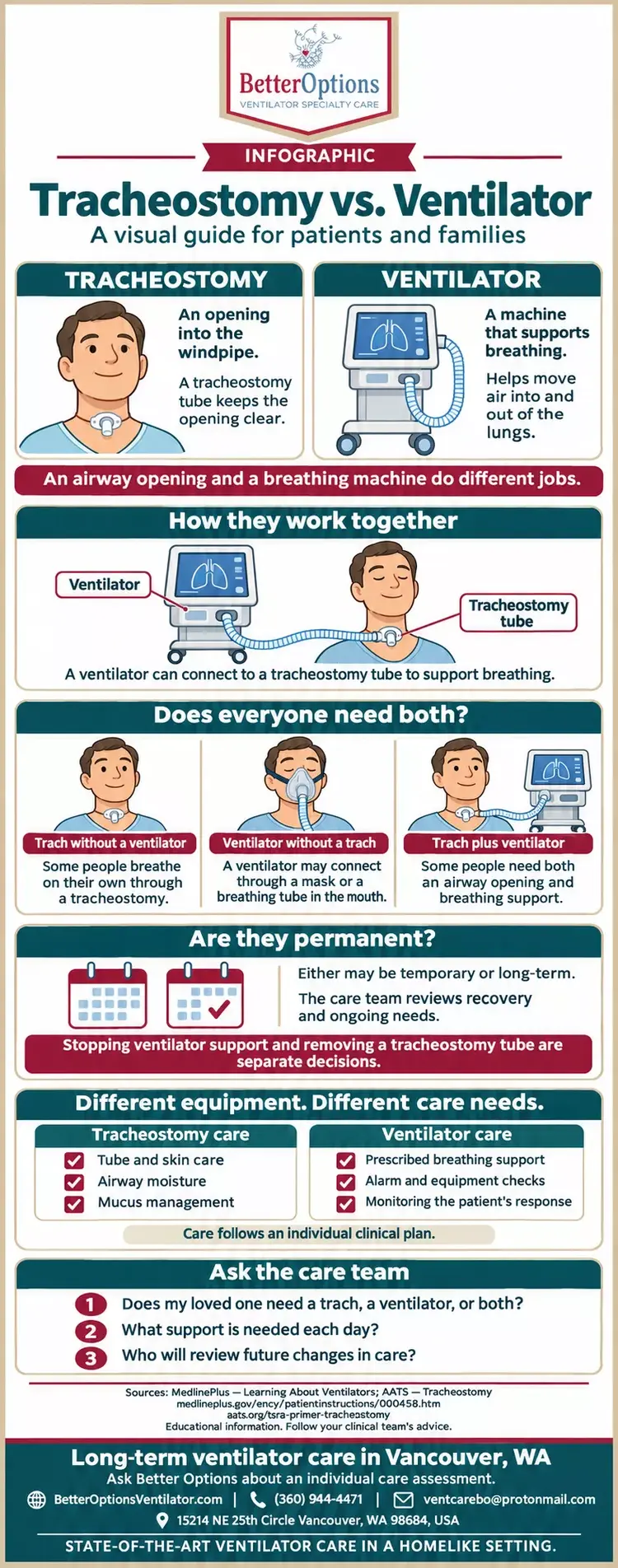

A tracheostomy and a ventilator do different jobs. One provides an airway through the neck. The other supports breathing. Some people need both, while others need only one. This tracheostomy vs ventilator infographic explains the difference and offers questions families can ask their care team.
Tracheostomy vs Ventilator: Understanding the Difference
A tracheostomy is an opening into the windpipe. A tube keeps this opening available for breathing. It may help someone with a blocked upper airway or provide access for ongoing ventilator support.
A ventilator helps move air into and out of the lungs. As MedlinePlus explains, it can connect through a mask, a tube in the mouth, or a tracheostomy tube. Our guide to invasive and non-invasive ventilation explains these options further.
Does a Tracheostomy Always Require a Ventilator?
No. Some people breathe on their own through a tracheostomy. Others need breathing support for part or all of the day. Stopping ventilation and removing the tracheostomy tube are separate clinical decisions.
The American Association for Thoracic Surgery describes how airway needs, coughing, and mucus affect tube removal decisions.
Questions to Ask About Ongoing Care
- Does my relative need airway care, breathing support, or both?
- What tracheostomy care will staff provide?
- Which communication options suit their needs?
Use the infographic below during family discussions. Knowing which support your relative needs can help you ask clearer questions about care at Better Options in Vancouver, WA.
Discuss Care Options
Call or contact Better Options to discuss your family’s needs.