
Can you talk on a ventilator? Sometimes. A breathing tube through the mouth prevents speech. Some people with a tracheostomy can speak with specialist help. Others use writing, pictures, or eye movements to share their needs.
Why Speaking Can Be Difficult
Speech needs air to pass through the vocal cords. A tracheostomy changes that airflow. Johns Hopkins Medicine explains that some people regain speech with practice and suitable equipment.
The breathing tube, alertness, strength, and medical condition all matter. Understanding different types of ventilator support helps explain why each person’s experience differs.
Six Ways to Communicate With a Ventilator Patient
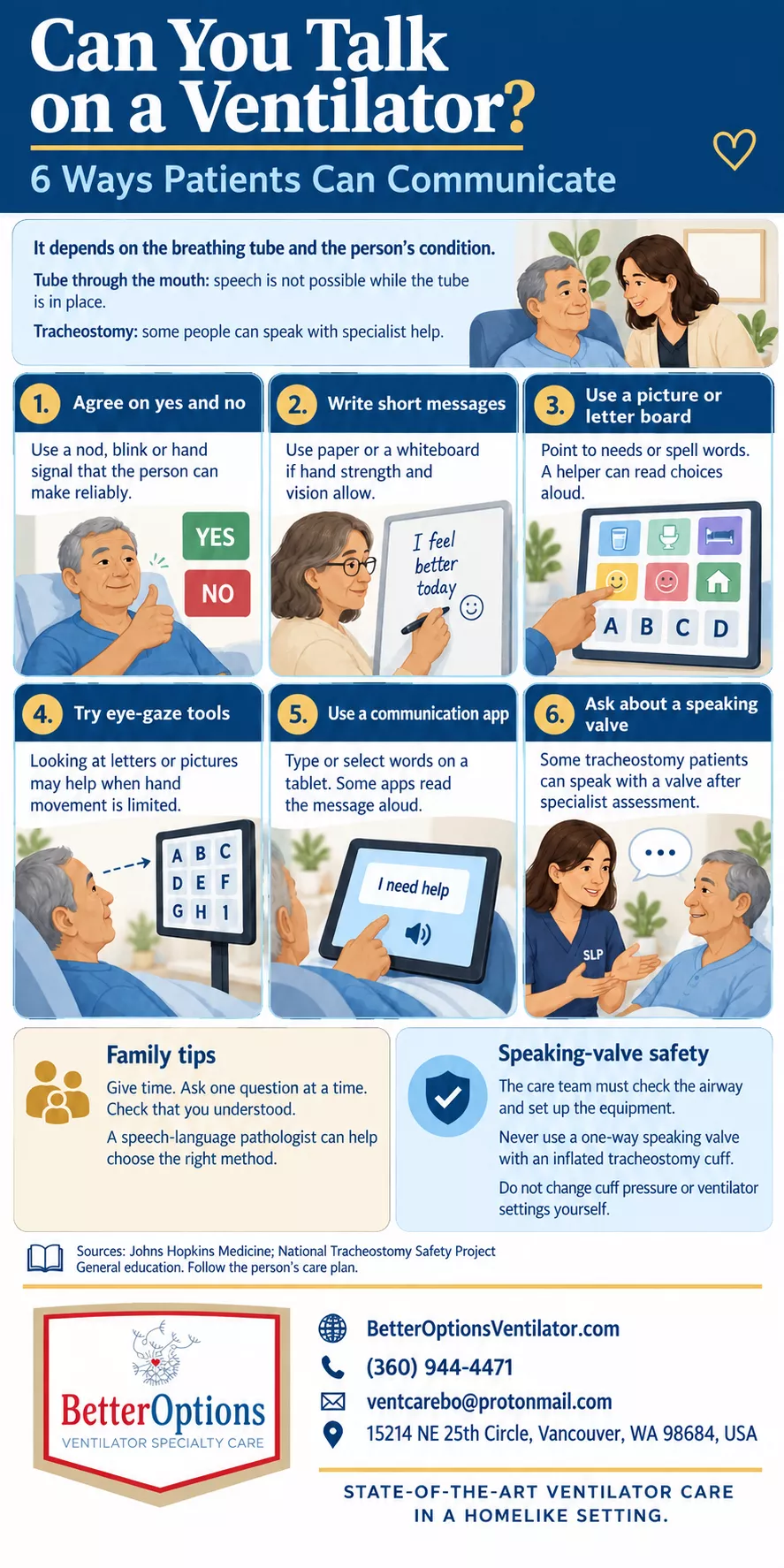
The infographic below shows options to discuss with the care team:
- Agree on clear yes and no signals.
- Write on paper or a whiteboard.
- Point to pictures or letters.
- Use eye-gaze tools when hand movement is limited.
- Try a tablet with a communication app.
- Ask whether a speaking valve is suitable.
A speech-language pathologist can help choose a method. Include it in the nursing care plan, so caregivers use the same approach.
Speaking Valves Need Assessment
Never use a one-way speaking valve with an inflated tracheostomy cuff. The National Tracheostomy Safety Project explains this safety rule. The clinical team must assess the airway and manage equipment changes.
Helping Families
Give your loved one time to answer. Ask one question, then wait. Repeat their message to check your understanding.
These habits help family members stay involved. Communication also supports personal choices and daily life on a ventilator, from asking for comfort to joining conversations.
Talk With Us
Does your loved one need long-term ventilator care? Call (360) 944-4471 or contact our team to discuss care needs and room availability at Better Options in Vancouver. Ask how we support daily routines, family involvement, and personal choices. We can explain our assessment process and help you plan a visit.