

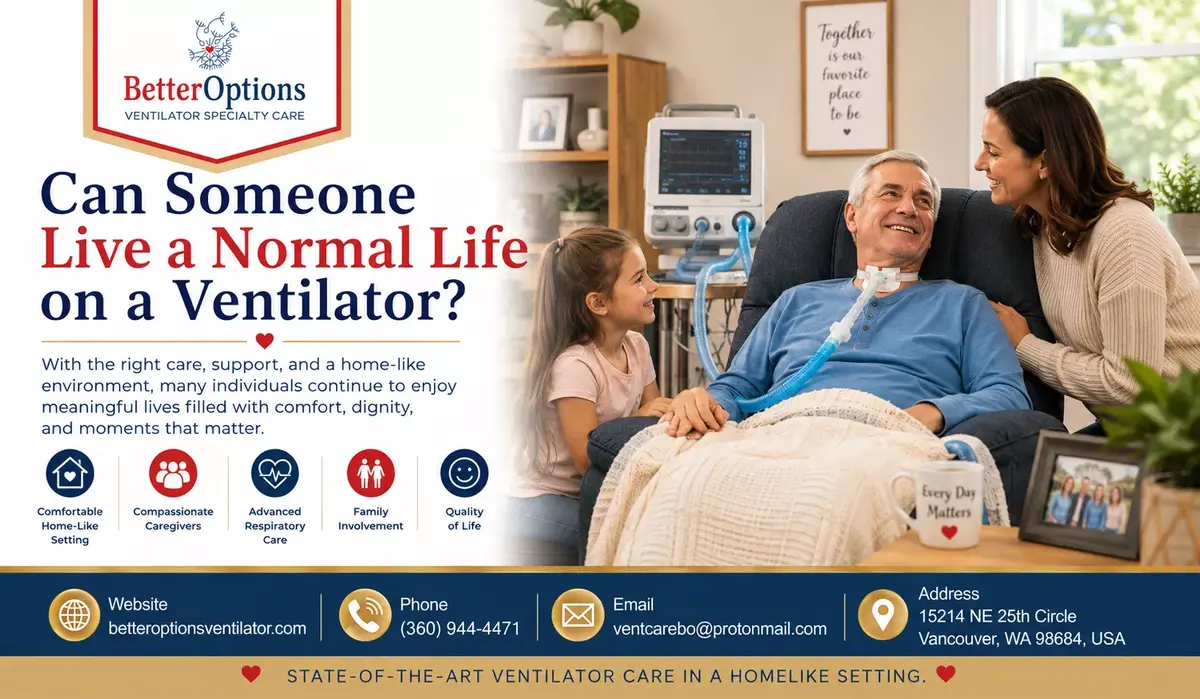
Many people can live on a ventilator for a longer period of time, like months or years. However, “normal life” may be different for each person, depending on their medical condition, mobility level, ventilator needs, and overall health.
If a person on long-term ventilation is medically stable, they may not need hospitalization. They can live in a home-like care setting and continue to enjoy meaningful daily activities with appropriate equipment, ongoing medical supervision, and trained caregivers.
What Does Life on a Ventilator Look Like?
When a person cannot breathe normally on their own, they may need ventilator support. This ventilator support may be temporary in most of the cases. But in some cases, ventilator support may be needed for months, years, or the rest of their life. There can be different reasons for ventilator requirement.
Daily Life Activities of Ventilator-Dependent Residents
Medically stable ventilator residents can enjoy their daily lives along with 24/7 medical care in care facilities like Better Options Specialty Ventilator Care.
Their daily activities include:
- Reading books or magazines,
- Watching their favorite TV shows,
- Listening to music,
- Spending time with friends and family,
- Enjoying their favorite meals
- Enjoying their indoor hobbies,
- Doing daily activities according to their physical condition,
- Celebrating special occasions (Birthdays, parties) with their family
Use of Portable Ventilators Increases Mobility
Depending upon the condition, some patients can use portable ventilators. With a portable ventilator, they can continue to get necessary breathing support and still take short trips outside their residence. They can easily move around, attend medical appointments, and attend social activities with care.
- Check out: Can a person go home while on a ventilator?
Does Being on a Ventilator Mean Being Bedbound?
No. Long-term ventilator dependency does not mean that a patient must remain in bed all the time. Depending on their medical condition and muscle strength, they can do some movements and physical activities.
Some patients can sit up, receive physical therapy, transfer to a chair, and use a wheelchair. The patients who have severe weakness due to long periods of serious illness may need extensive help with daily activities and movement.
Communication and Social Life Can Still Be Possible
Ventilator support doesn’t fully prevent meaningful interaction with family and healthcare team. Some patients are on non-invasive ventilation with a face mask. They can speak to communicate with the healthcare team and family when needed. Ventilator patients with tracheostomy support can use a special speaking valve or other methods for communication, suggested by the healthcare team.
Patients can also enjoy social connections, familiar daily routines, and indoor social activities with their family and friends.
Conclusion
If a person is on long-term ventilation, it does not mean that they cannot live a healthy and meaningful life. Patients with a stable medical condition can leave the hospital and start living a healthy life in a long-term ventilator care facility with the support of trained medical staff, appropriate breathing equipment, and regular medical follow-ups. Depending upon their medical condition, they can communicate with their friends & family, enjoy daily familiar routines, participate in indoor family events, and enjoy their hobbies.
Learn More About Long-Term Ventilator Care
Looking for compassionate, personalized ventilator care? Call (360) 944-4471 today or contact us online to discuss your loved one’s needs and care options.
