

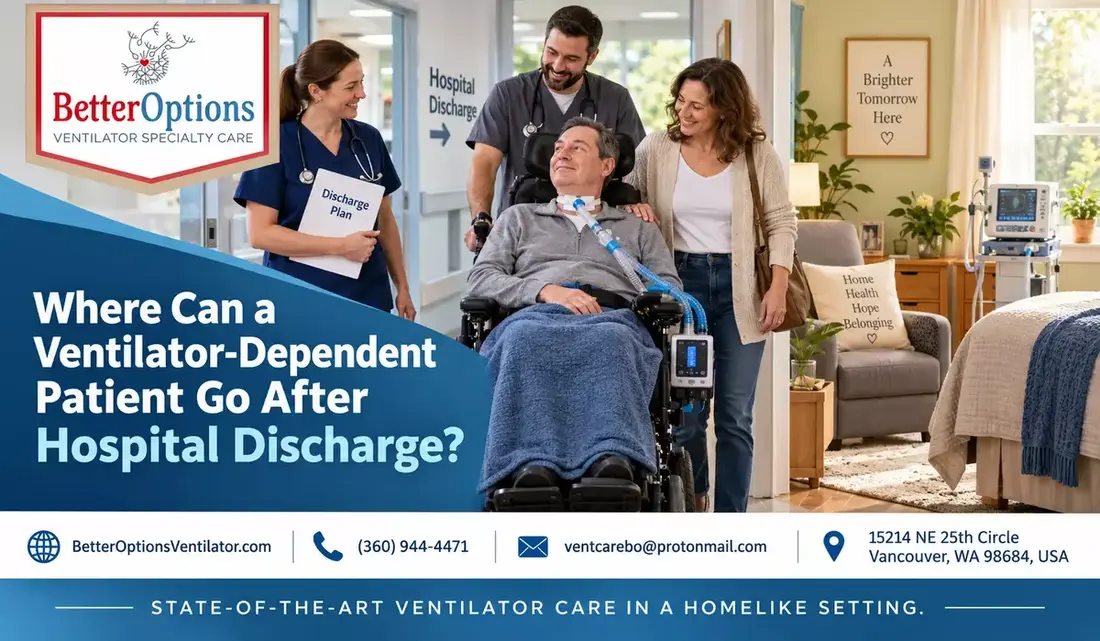
A ventilator-dependent patient may leave the hospital for an LTACH (Long-Term Acute Care Hospital), skilled nursing facility, rehabilitation program, adult family home, or private home. The right place depends on medical stability, ventilator needs, nursing support, insurance approval, and family resources. Planning should begin before the discharge date.
Start With the Patient’s Current Needs
When a person is discharged from the ICU or hospital, they may still need long-term care. Some patients still need help with breathing, suctioning, tracheostomy care, medicines, feeding, mobility, or skin protection. Others may still be working toward ventilator weaning.
The hospital team should complete a clinical review first. Families can also read what may happen when a patient cannot be weaned from a ventilator. Our referral guide for ventilator-dependent patients explains the records a receiving facility may request.
Possible Care Settings After Discharge
Long-Term Acute Care Hospital
An LTACH provides hospital-level care for people with serious medical needs who require a longer stay. Some LTACHs offer ventilator weaning and complex respiratory care. Admission depends on the patient’s condition, the services available, and insurance approval.
Skilled Nursing Facility
A skilled nursing facility may provide nursing and rehabilitation after a hospital stay. However, not every facility accepts ventilator-dependent residents. Staffing, equipment, respiratory support, and admission rules differ. Our comparison of an adult family home and skilled nursing facility can help families understand the difference.
Ventilator Adult Family Home
A ventilator adult family home offers residential care in a smaller setting. It may suit a medically stable person who still needs regular nursing, ventilator management, personal care, and close observation.
Before deciding, review the features of a long-term ventilator care facility and the ventilator adult family home FAQs. Families may also wish to see what daily life is like for a resident.
Care at Home
Some people can use a ventilator at home. The National Heart, Lung, and Blood Institute notes that home use requires trained caregivers and adequate nursing and other resources. The home may also need reliable power, backup equipment, supplies, and an emergency plan.
Read more about whether a ventilator patient can go home and the daily work involved in home care for a ventilator-dependent person.
Questions to Ask Before Choosing a Place
Ask the hospital case manager and receiving provider:
- Can the team manage this ventilator and tracheostomy?
- Is nursing support available at all required times?
- Who responds to alarms or sudden breathing problems?
- Are feeding, mobility, hygiene, and medication needs covered?
- Will insurance or Medicaid approve the placement?
- How will doctors and respiratory professionals coordinate care?
- Can the family visit before discharge?
A written ventilator nursing care plan helps everyone understand the patient’s needs. Families should also review ways to pay for long-term ventilator care because medical coverage and residential costs may follow different rules. Medicare explains that it generally does not pay for ongoing custodial long-term care.
Prepare Early for a Safer Transfer
Do not wait until the final hospital day. Ask for referrals, confirm equipment, review medicines, and share recent medical records. Better Options offers information for healthcare providers, residents, and family members who are considering long-term placement in Vancouver, Washington.
Talk With Better Options About Placement
Better Options provides specialized long-term ventilator care in a calm, homelike setting in Vancouver, Washington. Our team can review your loved one’s care needs and discuss placement. Call (360) 944-4471 or contact us online to check availability, ask questions, or arrange a visit with our care team today in person.
