

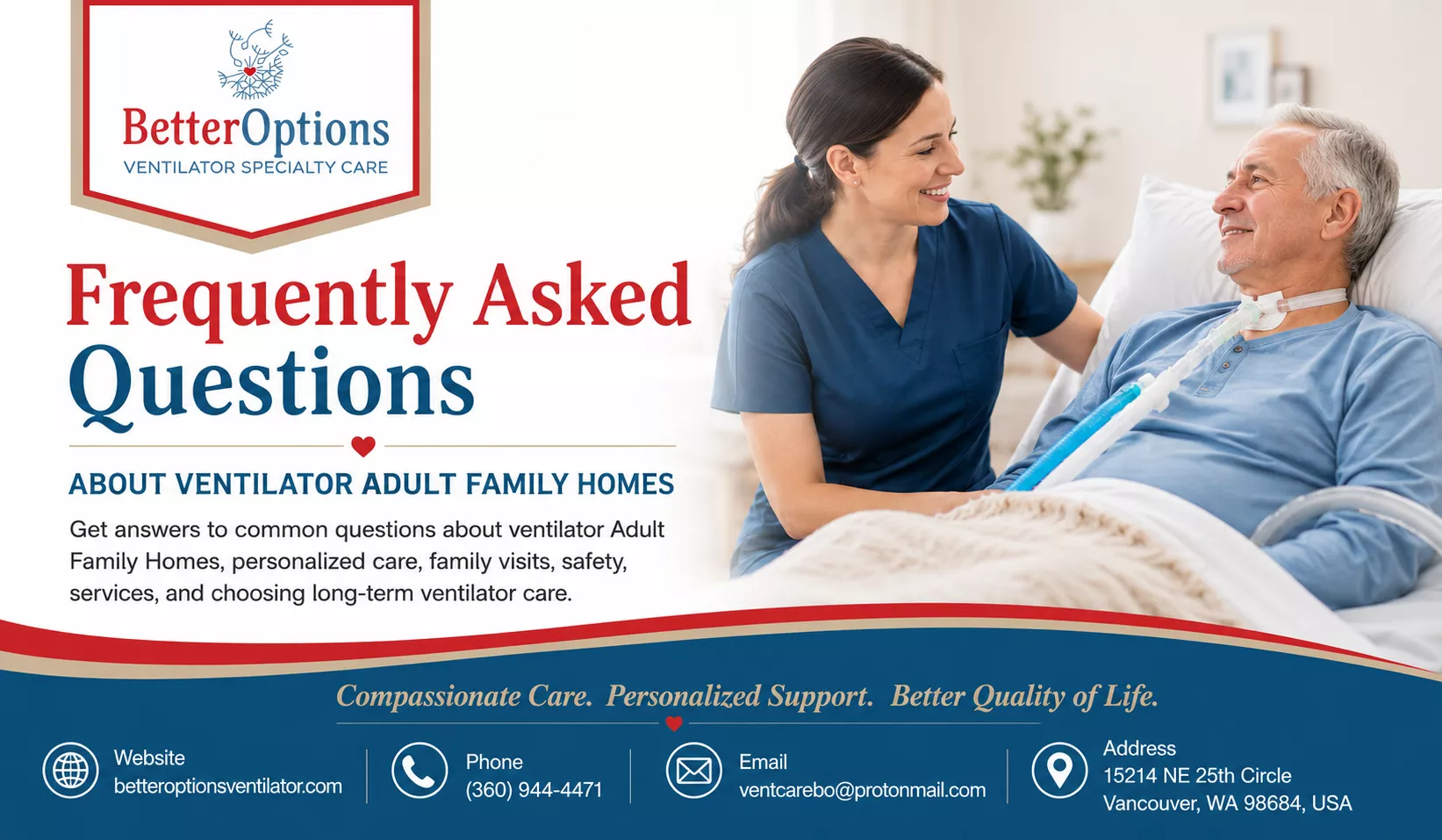
If you are planning to choose a long-term ventilator care facility for your loved one, then you may have many questions in your mind. Most of the questions are related to services, facilities, and care plans for the residents. It is also a difficult decision to choose the right ventilator care facility.
FAQs About Long-Term Ventilator Adult Family Homes
On this page, I am answering some of the most common questions asked about long-term ventilator care adult homes.
1. What is a ventilator Adult Family Home?
A residential care setting where people who require long-term ventilator support are assisted with daily activities is called a Ventilator Adult Family Home. A home-like setting is provided, and residents are given personalized medical and personal care. Usually, 5-7 residents/patients are admitted to an adult family home.
2. Who may benefit from long-term ventilator care?
A person may be put on a ventilator long-term if they require respiratory support due to injuries or specific medical conditions.
For example:
- Neurological disorders
- Chronic Respiratory Conditions like Asthma, pleural effusion, collapsed lungs, etc
- ALS
- Brain Injury
- Spinal Cord Injuries
- People recovering from severe chronic illness
As the medical conditions and histories of each patient differ, each resident receives personalized care as recommended by their physicians and therapists.
- Check out: Who Needs Ventilator Support
3. Is a ventilator Adult Family Home different from a nursing home?
Both a Ventilator Adult Family Home and a Nursing Home provide long-term care with some differences. Adult family homes only accommodate a few residents (5-10) and provide a home-like atmosphere with personalized care for each resident. Due to the smaller setting, healthcare providers are more familiar with exact preferences, daily life routines, and individual care needs.
4. Can family members visit their loved one?
Yes. Family members are allowed and encouraged to regularly visit residents at an adult family home. The opinions and suggestions of family members are given importance while creating a personalized care plan for each resident. Regular visits and communication from family and friends provide encouragement and emotional support to residents. Family gatherings and parties are also arranged in an adult family home.
5. Will my loved one receive personalized care?
The main purpose of an adult family home is to provide personalized care along with the best ventilator support. When a resident is referred to the facility, a detailed care plan is designed in collaboration with health care professionals and family members. All medical and personal needs of residents are assessed, and a plan is developed to provide the best care in a safe, dignified, and home-like environment.
6. What services are commonly provided?
Each facility may have different types and levels of services, but the most common and important services that are provided at adult family homes are:
- Ventilator support
- Personal care (Feeding, Hygiene, Oral Care, Toilet support etc)
- Mobility support
- Medication management
- Nutritional support
- Communication with healthcare providers
- Security services
- 24/7 nursing staff
- Emergence handling
You should ask for the complete details of all services provided by an adult family home before admission.
7. How is resident safety supported?
Safety of residents is at the top of the priority list in a ventilator specialty care facility. Following established procedures, continuous monitoring, maintenance of equipment, and close work with the healthcare team are important for the safety of the residents.
Other important safety features include:
- 24/7 trained staff coverage
- Staff competency in ventilator operation and troubleshooting
- Individualized ventilator care plan and emergency plan
- Continuous respiratory monitoring as clinically indicated
- Clearly audible/visible ventilator alarms
- Backup ventilator available when medically required
- Reliable primary electrical supply
- Emergency generator/backup power
- Fully charged ventilator batteries
- Emergency oxygen supply, when prescribed
- Manual resuscitation bag with appropriate tracheostomy/airway connection
- Appropriate suction equipment, including portable/battery-powered suction
- Spare tracheostomy tubes of appropriate sizes
- Emergency tracheostomy/airway supplies
- Appropriate humidification system
- Infection-control and hand-hygiene procedures
- Adequate supply of ventilator circuits, filters, tubing and other consumables
- Emergency procedures for ventilator failure, disconnection, and airway obstruction
- Emergency procedures for accidental tracheostomy dislodgement
- Fire safety and smoke/CO detection
- Emergency evacuation plan
- Backup plan for power outages and severe weather
- Emergency communication system/911 access
- Staff training and regular emergency drills
- Safe equipment placement and management of electrical cords
- Medication and oxygen safety procedures
- Regular equipment inspection and preventive maintenance
- Documented monitoring of ventilator settings and alarms
- Clear physician/RT/nursing escalation protocols
8. Can residents still enjoy daily activities?
Yes. Residents with long-term ventilator dependency are encouraged to participate in the daily activities for enjoyment and better quality of life. There are many activities residents can participate in. For example, listening to music, reading books, watching movies and TV shows, engaging in hobbies, spending time with visitors, and celebrating special occasions. Residents participate in these daily activities depending upon their health and abilities.
9. How do I know if an Adult Family Home is the right choice?
Know the exact needs of your ventilator-dependent patient, their personal preferences, and recommendations from the healthcare team. Then visit nearby adult family homes, check their provided services, ask questions, and get feedback from current residents.
10. What questions should I ask before choosing a ventilator care home?
Consider asking questions such as:
- Can they evaluate your patient’s condition and ensure that they can take care of him?
- Experience of the care team with ventilator-dependent residents
- Emergency handling plans
- How are individualized care plans prepared?
- Facilities provided for daily care
- How care teams communicate with family of residents
- Do they allow families to visit the facility before admission?
The answers can help you determine whether the facility is the right fit for your loved one.
Contact BetterOptions Ventilator Home in Vancouver, WA For More Queries
If you have more questions about long-term ventilator care, contact Better Options Ventilator Care (or call (360) 944-4471). Our team is committed to answering all of your queries and providing individualized ventilator care services for your loved ones in a comfortable, home-like setting.
